




Cold storage and grocery distribution facilities rely on industrial refrigeration systems that operate around the clock. Maintaining consistent freezer temperatures, preventing system downtime, and ensuring safe operations are essential for protecting product integrity and keeping supply chains moving. As systems age, even well-maintained facilities can experience performance issues, documentation gaps, insulation failures, and moisture-related refrigeration challenges that require targeted upgrades.
Louis A. Roser Company supported a large cold storage distribution facility in Northern Utah with multiple industrial refrigeration and mechanical projects aimed at improving freezer performance, strengthening reliability, increasing energy efficiency, and supporting safe long-term system management. The facility spans approximately 250,000 square feet and supports a high-volume distribution operation in the grocery market.
This project spotlight highlights several upgrade and service efforts completed at the facility, including:
- Freezer evaporator replacement
- P&ID validation and verification
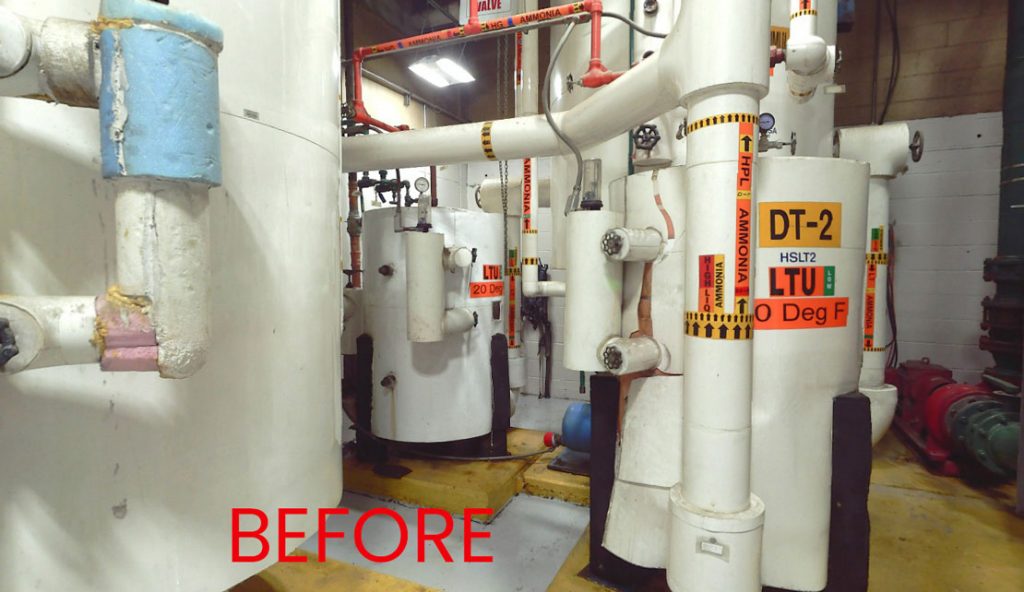
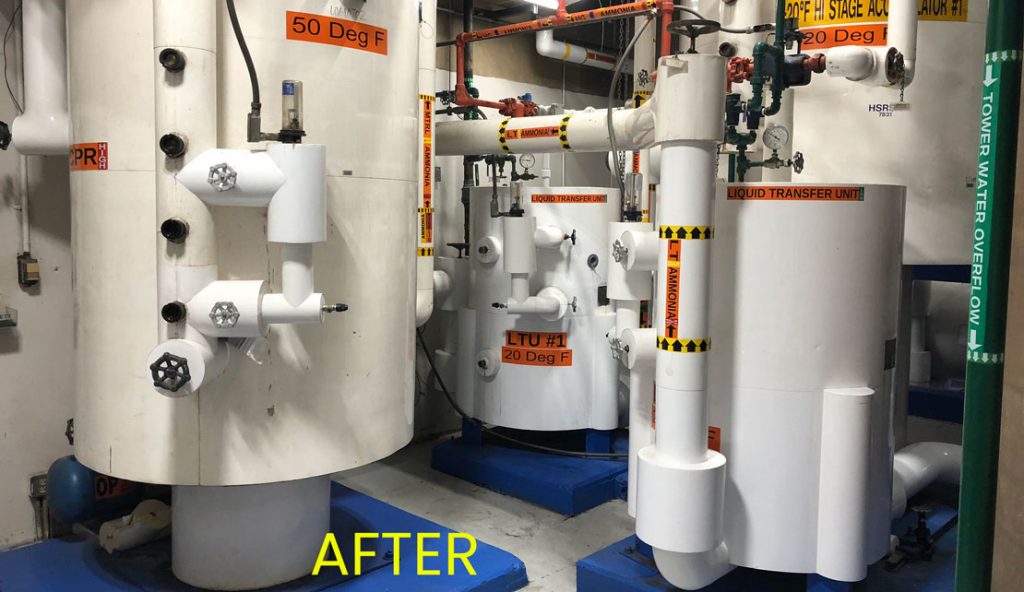
- Industrial insulation repairs
- Anhydrator installation for moisture removal
Throughout each effort, L.A. Roser’s teams combined construction, engineering, service, process safety management (PSM), and insulation expertise to deliver improvements that directly impact performance, uptime, and safety.
Supporting Cold Storage Operations With Industrial Refrigeration Expertise
Cold storage distribution facilities place unique demands on refrigeration infrastructure. Systems must maintain low temperatures despite constant door openings, frequent forklift traffic, varying product loads, and changing warehouse conditions. Many facilities operate with large-scale ammonia refrigeration systems and complex valve stations designed to support multiple temperature zones.
Over time, system upgrades and modifications are common, including capacity expansions, piping changes, control adjustments, and equipment replacements. Without a proactive approach, these changes can lead to:
- Reduced freezer performance and inconsistent temperature control
- Hot gas defrost inefficiencies
- Higher energy consumption
- Moisture buildup and long-term system health issues
- Incomplete or inaccurate P&IDs and documentation
- Insulation deterioration and increased condensation risk
L.A. Roser’s work at this Northern Utah facility focused on solving these challenges with targeted improvements and high-quality execution.
Freezer Evaporator Replacement: Improving Freezer Temperature Performance
A major upgrade at the facility involved a freezer evaporator replacement project. The goal was to reduce freezer temperature and support improved low-temperature storage conditions, including areas where stable temperature control is especially important.
Over time, evaporators can lose performance due to wear, internal corrosion, coil issues, and capacity limitations. As freezer requirements evolve, older evaporators may no longer provide the output needed for modern storage demands. In addition, aging or improperly configured valve stations can reduce hot gas defrost efficiency, which further impacts performance and energy use.
LA Roser’s scope included:
- Removal of four older evaporators
- Installation of new, higher-capacity evaporators
- Modifications to valve stations to improve hot gas defrost efficiency
- Re-insulation of new piping connections to protect system performance
Why Evaporator Replacement Matters in Cold Storage
In industrial refrigeration systems, evaporators are responsible for absorbing heat from the refrigerated space. In freezer zones, effective evaporator capacity and airflow play a direct role in pull-down performance and temperature stability. When evaporators are undersized or aging, facilities may see:
- Increased run times and higher electrical demand
- Greater strain on compressors and system components
- Temperature swings or slow recovery after operational heat loads
- Frost buildup and more frequent defrost cycles
- Reduced storage confidence for temperature-sensitive products
By upgrading to higher-capacity units and improving valve station functionality, L.A. Roser helped the facility improve overall freezer performance while supporting more efficient defrost operation.
Valve Station Modifications: Optimizing Hot Gas Defrost Efficiency
Industrial refrigeration systems depend on properly functioning valve stations to control refrigerant flow and support defrost cycles. When valve stations are outdated or no longer optimized for current operating conditions, facilities can experience inefficient defrost performance, excess energy consumption, and prolonged downtime for coils.
As part of the evaporator upgrade, L.A. Roser modified the valve stations to improve hot gas defrost efficiency, helping ensure the defrost cycle is effective without overextending defrost durations or stressing the system.
Benefits of Improved Hot Gas Defrost Operation
Optimizing hot gas defrost can support:
- Faster coil recovery and reduced freezer temperature disruption
- Reduced ice buildup and improved airflow
- Lower risk of extended defrost cycles affecting product zones
- Improved operational efficiency and reduced equipment strain
These improvements are particularly valuable in cold storage distribution centers, where consistent temperature performance must be maintained during high-traffic operations.
P&ID Validation and Verification: Protecting Safety and Supporting PSM Compliance
Many cold storage operations undergo multiple system changes over decades of facility use. Piping re-routes, valve replacements, equipment upgrades, and added capacity can gradually separate field conditions from the original documentation. Without accurate P&IDs, facility teams may face challenges in:
- Safe system troubleshooting and isolation
- Maintenance planning and shutdown coordination
- PSM compliance and audit readiness
- Emergency response and hazard analysis
- Future system upgrades and expansions
L.A. Roser completed a P&ID validation and verification effort to help ensure system documentation reflected real-world conditions.
The scope included:
- Creation of updated and accurate P&IDs
- Independent review and verification for accuracy
- A thorough process of second and third checks to confirm final documentation
Why Accurate P&IDs Matter for Industrial Refrigeration
P&IDs are foundational to safe facility operations. In ammonia refrigeration environments, accurate piping and instrumentation documentation helps reduce risk and improve decision-making across departments. Updated P&IDs can also strengthen:
- Mechanical Integrity Programs
- Management of Change (MOC) processes
- Training efforts for operators and maintenance personnel
- Long-term system planning and capital budgeting
By delivering reliable, validated P&IDs, L.A. Roser supported both system clarity and safety readiness.
Industrial Insulation Repairs: Protecting Efficiency and Preventing Condensation
Industrial insulation plays a critical role in cold storage refrigeration systems. Damaged or deteriorated insulation can lead to:
- Increased heat gain and energy waste
- Condensation and moisture issues
- Ice buildup on piping and surfaces
- Potential corrosion under insulation (CUI)
- Reduced system performance over time
At this Northern Utah facility, LA Roser’s experienced insulation team performed targeted insulation repairs across key system areas.
During the insulation repair effort, vessels were also checked to confirm proper wall thickness, supporting long-term asset integrity and reliable operation.
Why Insulation Services Are Essential in Cold Storage
In cold storage distribution facilities, insulation is more than a comfort feature. It directly impacts:
- Refrigeration efficiency
- Temperature stability
- Moisture control and safety
- Equipment longevity and corrosion prevention
By restoring insulation performance and evaluating vessels as part of the process, L.A. Roser helped strengthen system durability and reduce avoidable losses.
Anhydrator Installation: Moisture Removal for Improved System Health
Moisture contamination in industrial refrigeration systems is a significant concern, especially in aging systems. Water in ammonia systems can contribute to corrosion, operational instability, freeze-related issues, and long-term performance degradation. Even small amounts of moisture can create hidden inefficiencies and increase maintenance burden.
To address this risk, L.A. Roser installed an Anhydrator designed to remove moisture from the system refrigerant.
Following installation, the facility saw rapid results:
More than 55 gallons of water were removed from the ammonia within the first three weeks.
Why Moisture Removal Matters in Ammonia Refrigeration
Moisture removal supports:
- Improved system efficiency and stability
- Reduced risk of corrosion inside piping and vessels
- Better long-term performance in low-temperature operations
- Reduced potential for freeze-related restrictions or operational challenges
- Improved reliability and fewer system disruptions
The Anhydrator installation was a high-impact upgrade that supported overall system health and helped restore refrigerant quality in an aging system.
A Multi-Discipline Approach to Cold Storage Refrigeration Upgrades
This project is a strong example of L.A. Roser’s ability to support industrial refrigeration clients with multi-trade services under one roof. At this facility, work involved coordination across:
- Construction, design and engineering
- Service
- PSM support
- Industrial insulation
- Refrigeration system upgrades
This integrated approach helps cold storage facilities reduce vendor complexity, improve project efficiency, and ensure work is completed with a unified understanding of system performance, safety, and long-term reliability.
Serving Cold Storage and Industrial Refrigeration Clients Across the Western U.S.
Louis A. Roser Company supports industrial refrigeration and mechanical systems for cold storage and distribution operations throughout the Western United States, including:
Utah, Idaho, California, Colorado, Nevada, Oregon, Washington, and Montana.
From freezer evaporator replacements and hot gas defrost optimization to P&ID verification and moisture removal solutions, L.A. Roser delivers reliable support for facilities that require high-performance refrigeration systems every day.
If your cold storage operation is experiencing temperature performance challenges, documentation gaps, insulation deterioration, or system moisture issues, L.A. Roser can help evaluate your system and implement practical improvements that enhance reliability and support safe long-term operation.